

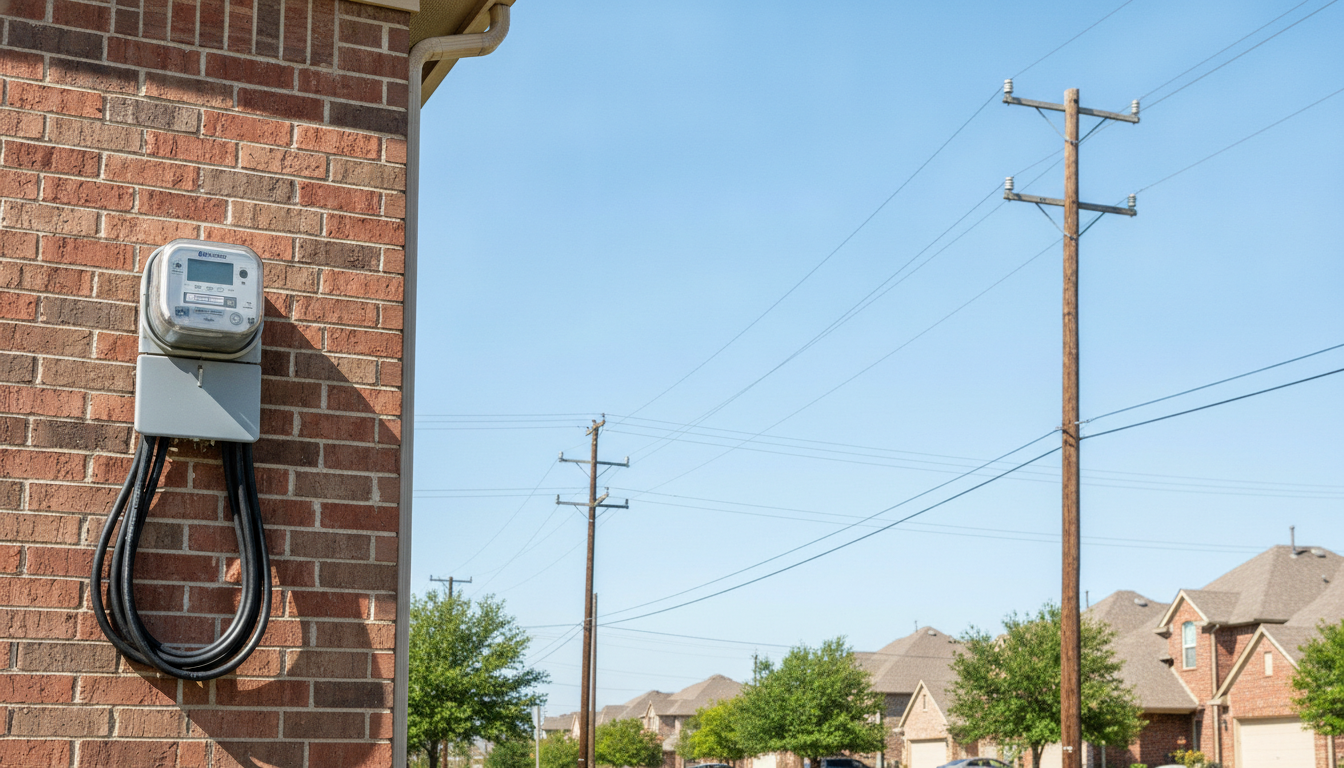
Texas summers are legendary for driving up air conditioning loads, which inevitably leads to a closer inspection of the monthly electricity bill. When Houston-area homeowners look past their retail energy rate, they often spot a line item that sparks instant confusion: CenterPoint Energy TDSP pass through charges. Understanding how these fees function within the deregulated ERCOT marketplace is the key to mastering your home’s energy budget and realizing that you have more control over your bill than you might think.
The Structural Divide: Retail Providers vs. Your Regulated Utility
To understand your electricity statement, you must first understand the structural divide of the Texas energy grid. Under the state’s deregulated model, your Retail Electric Provider (REP) acts as your financial partner. Your REP handles your billing contract, manages your customer service, and purchases the wholesale power you consume. However, they do not own a single wire, pole, or substation.
That physical responsibility falls entirely on your state-assigned Transmission and Distribution Service Provider (TDSP)—which, for the greater Houston area, is CenterPoint Energy. No matter which brand name is on your monthly bill, CenterPoint’s crews are the ones physically maintaining the grid, reading your smart meter, and restoring power after severe Gulf Coast weather hits.
The Truth About CenterPoint Energy TDSP Pass Through Charges
Because your TDSP maintains the physical infrastructure, they must be compensated for their delivery services. These costs are passed directly to you on your monthly statement as “pass-through” charges. A common misconception among Texas consumers is that shopping for a cheaper electricity plan will lower these specific delivery rates.
In reality, the Public Utility Commission of Texas (PUCT) strictly regulates these charges. They are completely uniform across CenterPoint’s entire service territory. Whether you choose a premium retail provider with all the bells and whistles or a budget-friendly, no-frills billing partner, your local utility’s delivery charges remain 100% identical. Retail providers simply collect these fees from you and pass them directly to CenterPoint without adding any markup.
These regulated charges generally consist of two main components:
- Fixed Monthly Customer Charges: A flat, recurring fee charged per billing cycle to cover the administrative costs of maintaining your connection to the grid, regardless of how much power you use.
- Volumetric Distribution Delivery Costs: A per-kilowatt-hour base rate that covers the physical transportation of electricity over the wires to your home.
Why Delivery Fees Fluctuate Seasonally
Many homeowners wonder why their TDSP fees change from month to month even if they are locked into a fixed-rate retail contract. Because a significant portion of these charges are volumetric, your total delivery cost scales directly with your household usage. During peak summer months, when heavy air conditioning loads drive up your kilowatt-hour consumption, your volumetric distribution delivery costs will naturally rise.
Additionally, the PUCT allows TDSPs to make periodic, mandatory rate adjustments to account for infrastructure upgrades, transmission line expansions, and system resilience. These routine adjustments affect the overall cost of delivery for every single household in the territory, regardless of your chosen retail plan.
How Electric Texan™ Simplifies the Texas Marketplace
At Electric Texan™, we believe that making deregulated energy and exercising the “power to choose” should be as easy as possible for hardworking Texans. We cut through the confusion of pass-through fees and retail rates by offering a transparent, simplified shopping experience.
- Handpicked Energy Companies: We vet and select retail electricity providers based on financial reliability, transparency, and top-tier service.
- Independent Localized Comparison Engine: Shop and compare plans tailored specifically to your ZIP code without having to bounce between dozens of different websites.
- Clear Rate Breakdown: We help you understand exactly what you are paying for, separating your energy supply rate from your mandatory utility delivery charges.
- 20 Years of Texas Expertise: Backed by two decades of experience as one of the state’s top Power to Choose sites, we understand the regional realities of the Texas grid.
We also champion full contract and moving mobility. If you move to another address, you hold the freedom to seamlessly keep your provider or cancel your contract to fit your next location—it’s completely up to you.
Take Control of Your Electricity Bill Today
Understanding the difference between your billing partner and your physical infrastructure provider removes the mystery from your monthly statement. While you cannot change CenterPoint’s regulated delivery fees, you have complete freedom to shop for the best retail energy rate available in your area. Ready to master your utility bill components and find a reliable partner for your home? Put your Power to Choose to work by comparing cheap, handpicked Texas electricity plans without having to bounce across multiple sites. Reach out to our Texas-based team of specialists at 1-844-567-2863 or visit the Electric Texan Home Page to analyze real plans for your ZIP code today!
Will switching my retail electricity provider cause a temporary power outage?
No. Switching retail electric companies changes only your billing contract, involving zero physical infrastructure alterations or service gaps because your local delivery wires and poles remain completely identical. CenterPoint Energy continues to deliver your power seamlessly throughout the transition.
Can I negotiate or lower my CenterPoint Energy TDSP pass through charges?
No, you cannot negotiate these fees. TDSP charges are strictly regulated by the Public Utility Commission of Texas (PUCT) and are uniform for all residential customers within that utility’s service territory. The only way to reduce the volumetric portion of these charges is to lower your overall household electricity consumption.
How often do TDSP delivery charges change?
TDSPs typically adjust their regulated rates twice a year, usually in the spring and fall, with approval from the PUCT. These adjustments cover transmission system upgrades and recovery costs, and they apply equally to all consumers in the service territory regardless of their retail provider.