

Navigating the Texas energy market can sometimes feel like trying to decode a foreign language, especially when your monthly statement arrives with multiple line items. If you live in the southern half of the state, you have likely noticed charges associated with your local wire and pole operator. Understanding how these structural fees work empowers you to take full control of your household budget while enjoying the unique advantages of the Lone Star State’s open market.
The Anatomy of the Texas Power Grid
To fully grasp your monthly statement, it helps to understand how the power grid is split into two distinct tiers. On one side, you have your Retail Electric Provider, the financial entity that handles your billing contract, customer service, and market promotions. Whether you are shopping for electricity Houston packages or browsing options for electricity Dallas homes, your REP is the company whose name appears on your invoice.
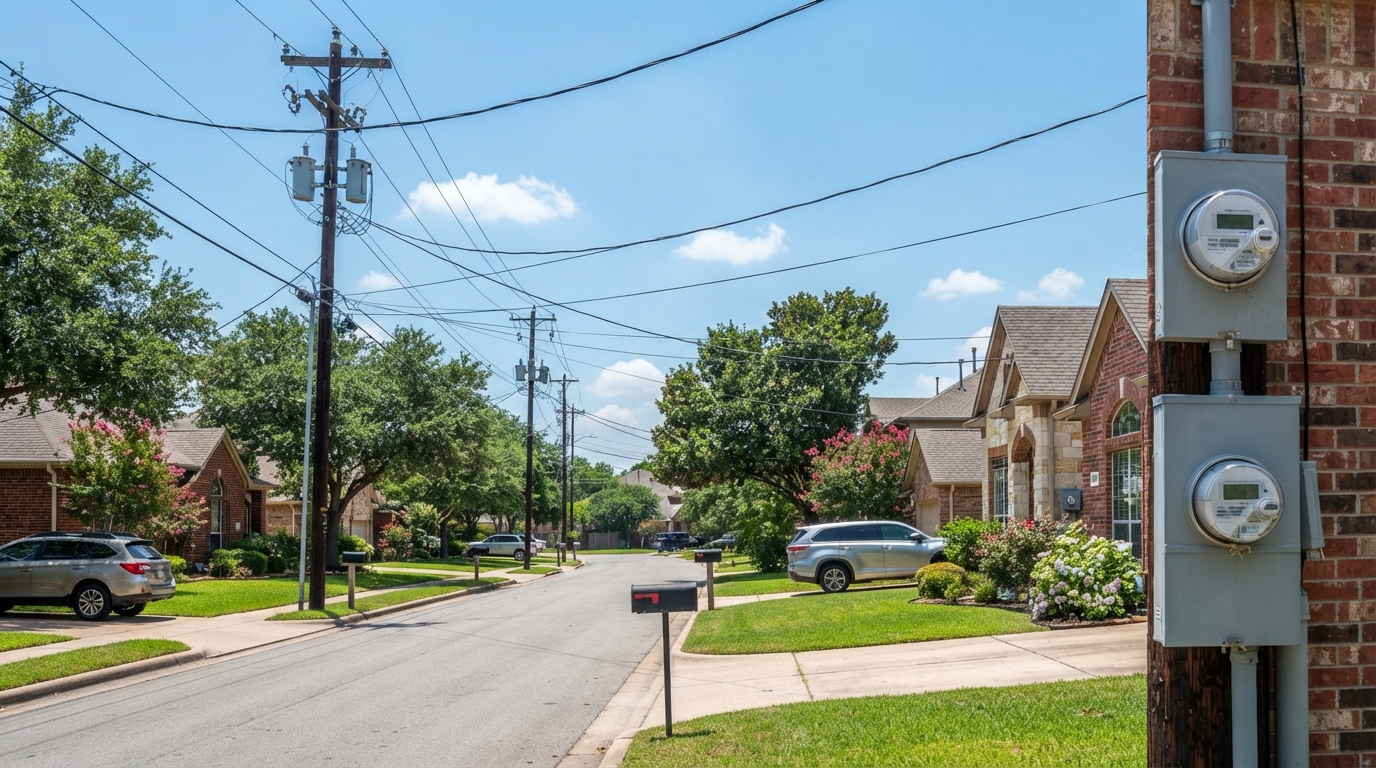
On the other side of the equation are the Transmission and Distribution Service Providers, often abbreviated as TDSPs. These regulated utilities own and maintain the physical infrastructure—the steel towers, wooden poles, transformers, and smart meters attached to your home. While you have the freedom to choose your billing partner, your regional wire company is assigned based strictly on your geographic location.
Decoding CenterPoint Energy TDSP Pass Through Charges
One of the most common questions residents ask revolves around delivery fees. When examining your monthly bill, you will typically see charges divided into energy supply generation and delivery components. The delivery portion consists of Public Utility Commission of Texas regulated costs that your retail provider collects on behalf of your local utility company and passes through directly without markup.
These delivery fees cover the continuous maintenance of the grid, emergency storm repairs, and the advanced smart meter infrastructure that tracks your usage in 15-minute intervals. Because these delivery rates are strictly regulated by the state, they remain completely identical for your specific service territory regardless of which retail provider you select.
Maximizing Freedom in a Deregulated Market
The true beauty of the ERCOT market lies in consumer empowerment. You are never locked into a single company for your financial contract. Whether you are looking for traditional fixed-rate agreements, green energy sources, prepaid electric service, or small business energy plans, the power to choose rests entirely in your hands. Furthermore, the market offers incredible flexibility: if you decide to move to another address across the state, you hold the legal freedom to seamlessly keep your provider or cancel your contract to fit your next location.
At Electric Texan™, we believe in making this process as transparent as possible. We help you navigate the system with confidence by offering:
- Handpicked energy companies vetted for financial reliability and transparency.
- An independent localized comparison engine designed for your exact ZIP code.
- Clear rate charts breaking down energy charges by service area.
- A proud 20-year history of keeping Texas consumers informed and satisfied.
Conclusion
Understanding how your regional utility interacts with your retail plan removes the confusion from energy shopping. By separating the cost of physical delivery from your retail electricity supply, you can make smarter, more informed decisions for your household. Ready to master your utility bill components and find a reliable partner for your home? Put your Power to Choose to work by comparing cheap, handpicked Texas electricity plans without having to bounce across multiple sites. Reach out to our Texas-based team of specialists at 1-844-567-2863 or visit the Electric Texan Home Page to analyze real plans for your ZIP code today!
Frequently Asked Questions
Does switching my retail electric company cause any disruption to my power service?
No. Switching retail electric companies changes only your billing contract and involves zero physical infrastructure alterations or service gaps. Your local delivery wires and poles remain completely identical, and your power will never be interrupted during a switch.
Why are delivery charges separate from my energy supply rate?
Delivery charges cover the regulated cost of transmitting electricity safely over public lines and maintaining physical infrastructure like meters and substations. Your retail provider simply collects these mandatory fees on behalf of your local TDSP and passes them through to the utility without adding any markup.
### Can I choose which utility company delivers power to my house?
No. Your local TDSP is assigned based strictly on your physical geographic location. While you have complete freedom to choose your retail billing provider, the physical lines connected to your home are managed by your designated regional utility company.